


Our Mission

South Gippsland Beekeepers cultivate a welcoming and thriving community of beekeepers by providing comprehensive education and support for enthusiasts at all experience levels. We promote sustainable beekeeping practices for the enhancement of bee population health.
Our next Club Meeting:
End-of-year Celebration
Thursday 12 November 2026
7pm New-Bees - Beginner Chat
7.30pm Meeting
8pm Ulysses Quiz, Door Prizes and Supper
Ulysses Quiz, Door Prizes and Supper
***
If you feel inspired, bring a plate to share
St Peter's Anglican Church Hall
2 Bruce Street, Leongatha.
Our club meetings are on the second Thursday of each month at St Peter's Anglican Church Hall, 2 Bruce Street, Leongatha.

2026 Club Gear
Now Available
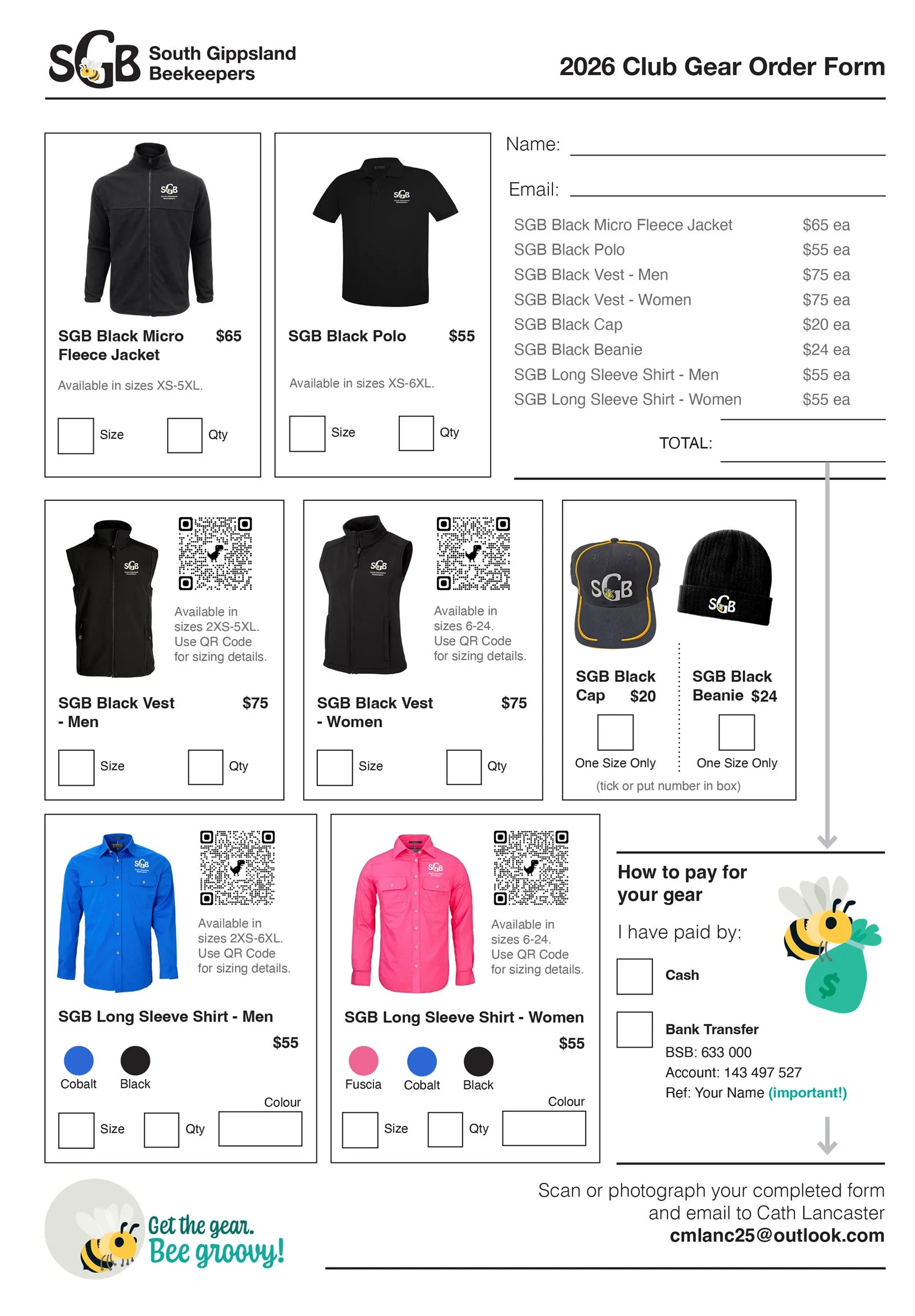
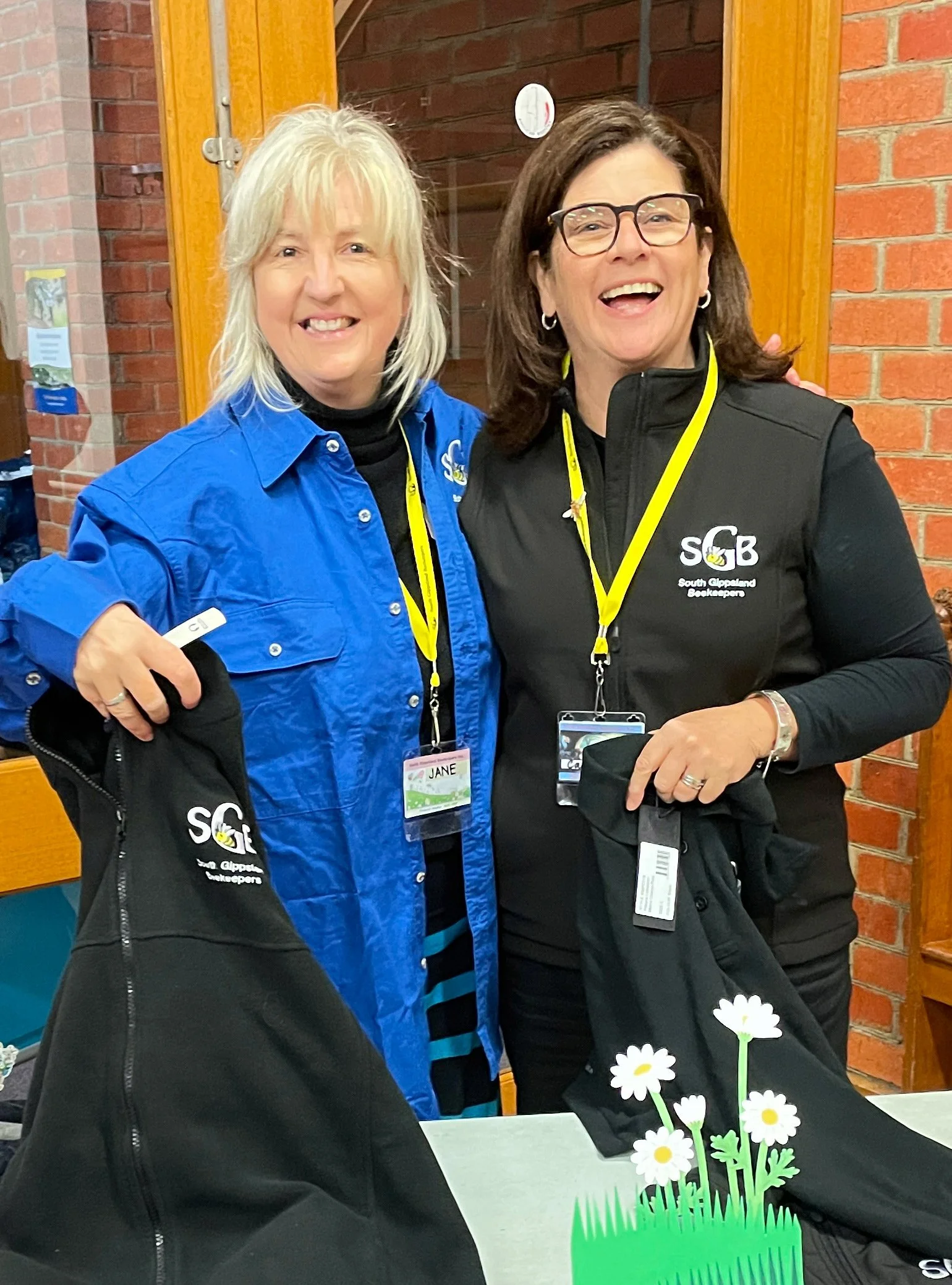
Get your order in before September 3 for pickup at the September 10 meeting. Here’s how:
Download the Form
Choose Your Gear
Select Payment Method
Email form to Cath
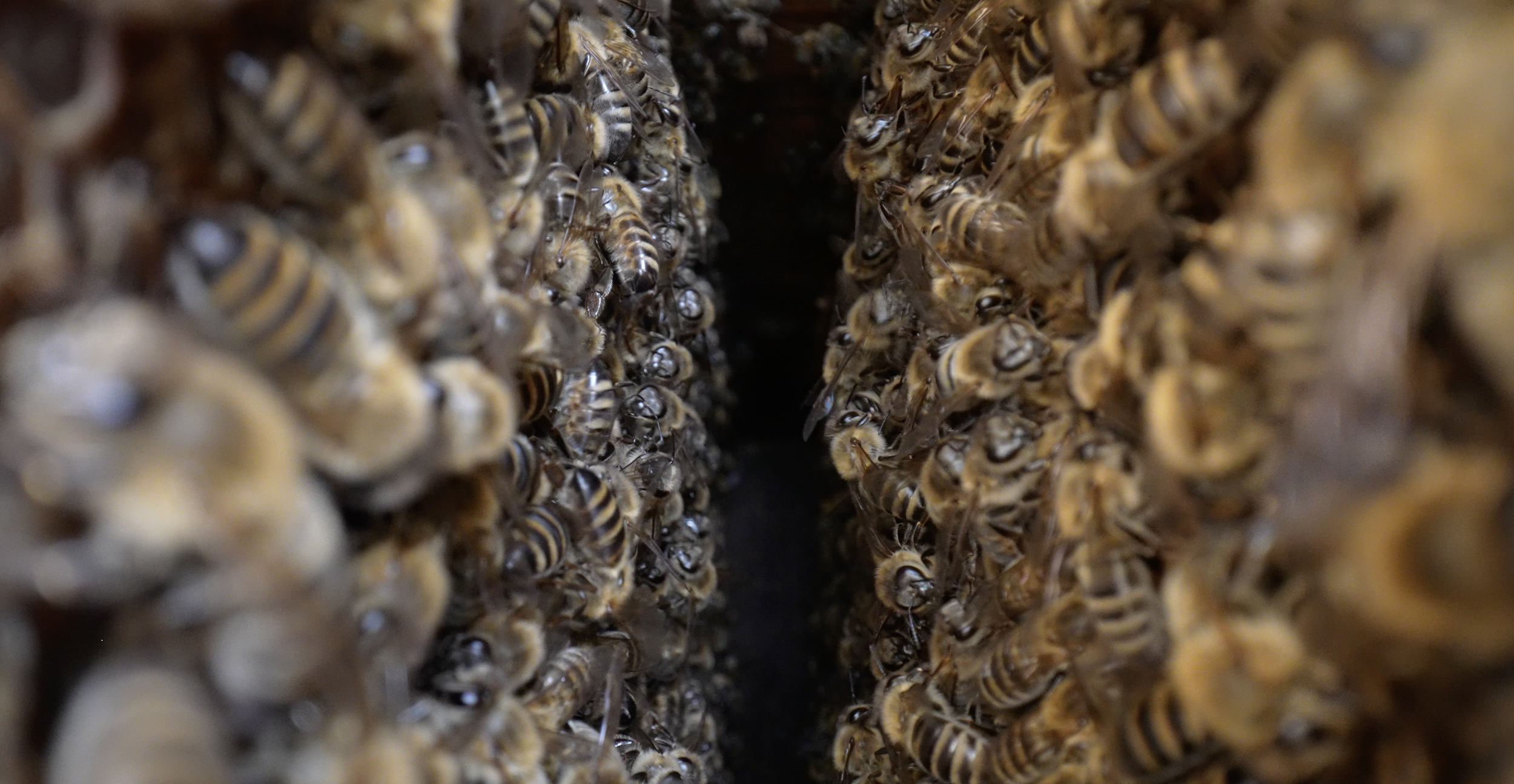
“If bees only gathered nectar from perfect flowers, they wouldn't be able to make even a single drop of honey.”
— Matshona Dhliwayo

What is the bee’s main job?
In simple terms, bees play a crucial role in plant pollination. They transfer pollen between plants of different sexes, facilitating fertilization, and even between different parts of the same plant, aiding in its reproduction. Bees also contribute to the survival of plants by preventing inbreeding.
And if we had no bees? The potential loss of plants pollinated by bees would impact the entire ecosystem, affecting animals that depend on those plants and so on up the food chain. A world without bees might struggle to support the global human population of 7 billion, leading to a significant reduction in the availability of fruits and vegetables in our supermarkets.

How can we help the bees?
Maintaining your own hive is more than just a rewarding hobby; it's a means of fostering robust honeybee populations and promoting essential pollination for plants and crops in your vicinity. Beekeepers enjoy a flourishing garden and the additional perk of harvesting honey. If you're keen on starting your own hive, participate in an upcoming Introductory Course.
Swarm Collection
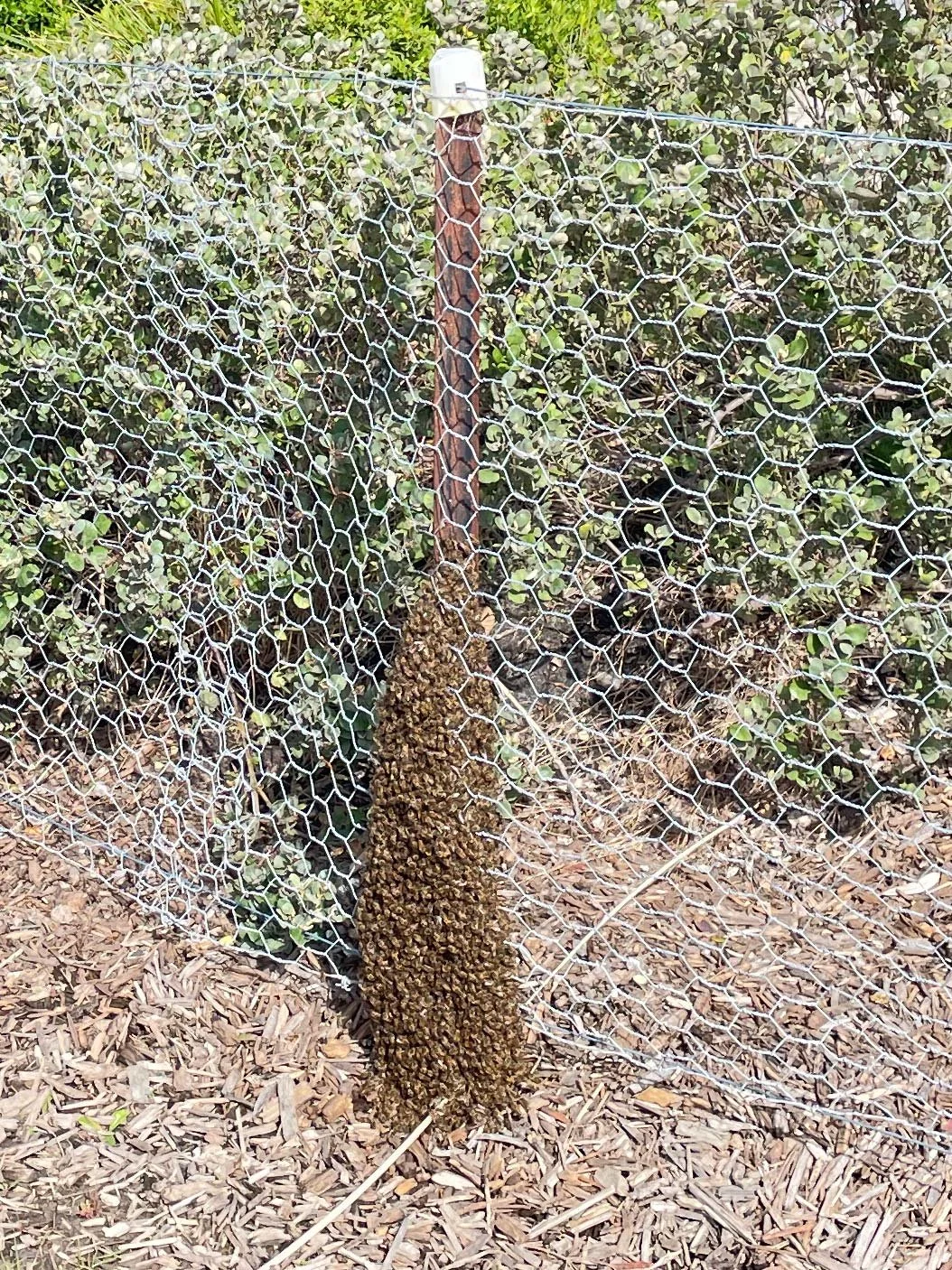
Have you discovered a swarm of bees?
Generally, swarming bees are not aggressive, but we encourage you to contact our Swarm Coordinator so the bees can be safely re-homed in a managed hive.
Swarm Coordinator:
John Riske 0421 107 951
This service is provided free of charge; however, travel costs may apply.
If possible, please take a photo of the swarm and send it by text to the Swarm Coordinator before calling, as this helps us assess the situation more efficiently.
(Beekeepers are reminded that it is their responsibility to make every effort to prevent swarming and to collect any swarms originating from their own hives.)
Honouring our Members
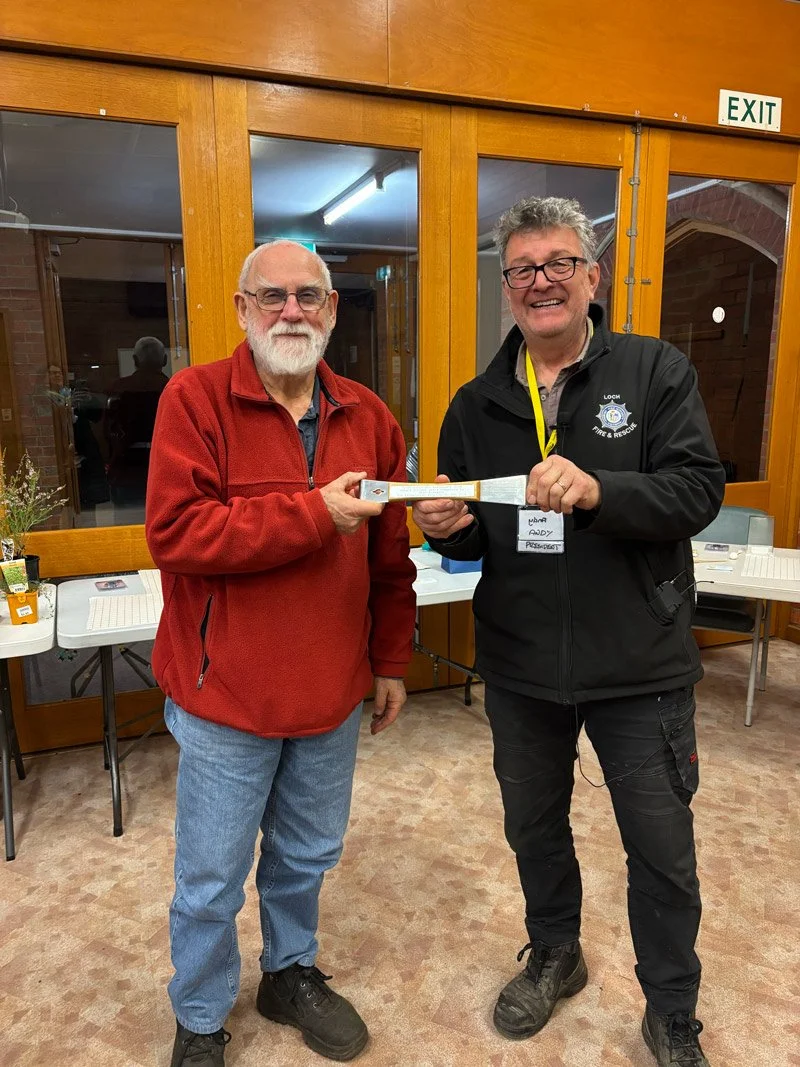
The Howard Stevens Award
Howard Stevens was a member of the club for many years and was generous in his sharing of expertise around beekeeping, as well as allowing his hives to be used for training purposes for the Beekeeper Course. He was well loved and the Award was established on his passing.
Awarded to long serving members who have provided a service above and beyond expectations of their role on the committee or within the club and meet the following criteria:
Regular contributor to the club
Evidence of mentoring and support
Sharing ideas
Regular attendance
Acts in the best interest of the club
Our 2026 recipient is Stan Glowacki.
Acknowledgement of Country
South Gippsland Beekeepers respectfully acknowledges the Bunurong and BoonWurrung people, the traditional custodians of the land on which we meet, live and work. We recognise their continuing connection to the land, water and community and pay respect to elders past, present and emerging.